Over 2,000 years ago, the Greek physician Hippocrates made a bold claim: that all disease begins in the gut. For centuries, this was dismissed as ancient folklore. Today, modern science is proving he was right.
Your gut is far more than a digestive organ. It is home to trillions of bacteria, viruses and fungi that collectively make up your gut microbiome, and research is now showing that these microbes influence almost every system in your body, from your mood and memory to your immune defences and how you age.
In this post, we explore what the science says, why it matters, and what you can do to support your gut starting today.
“You have more microbial cells in your body than human cells, and the genetic material of these microbes outnumbers your own DNA by around 150 to 1.”
What Is the Gut Microbiome?
Think of your gut microbiome as a vast internal ecosystem, a community of trillions of microorganisms living in your digestive tract. You have more microbial cells in your body than human cells, and the genetic material of these microbes outnumbers your own DNA by around 150 to 1.
This ecosystem is unique to you. It is shaped by how you were born, what you were fed as a baby, where you grew up, what you eat, how much stress you carry, and even who you live with. No two people have exactly the same microbiome, which is one of the reasons why the same diet or supplement can work brilliantly for one person and not at all for another.
When this ecosystem is balanced and diverse, it keeps you well. When it is disrupted, the effects can be felt across your entire body, often in ways that seem completely unrelated to digestion.
Your Gut and Your Brain Are in Constant Conversation
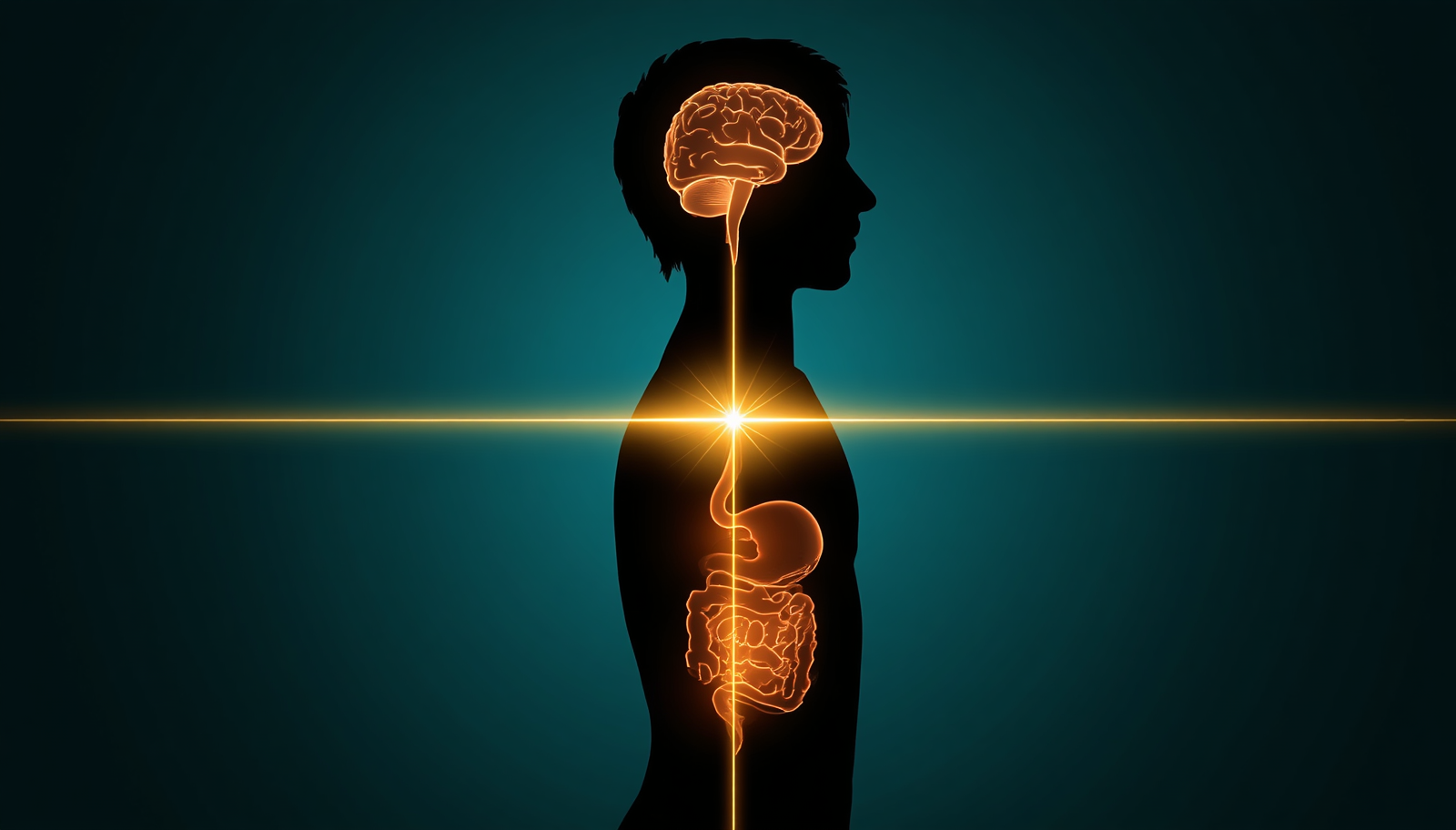
Have you ever had a gut feeling about something? Or felt sick with nerves before a big event? That is not a coincidence. Your gut and your brain are in constant two-way communication through what scientists call the gut-brain axis.
This communication happens through several channels:
The Enteric Nervous System: Your gut contains over 500 million nerve cells, so many that it is sometimes called the "second brain." It can send and receive signals independently from your brain, processing information and influencing how you feel.
The Vagus Nerve: This is the main communication highway between your gut and your brain. It runs signals in both directions, meaning your gut is constantly reporting back to your brain, and your brain is responding.
Neurotransmitters: Around 90% of your body's serotonin, the chemical most associated with mood and happiness, is produced in your gut. Your gut microbes also produce dopamine, GABA and other brain chemicals that influence how calm, focused and content you feel.
Inflammation: When your gut microbiome is out of balance, it can trigger low-grade inflammation throughout the body, including in the brain. This type of chronic inflammation has been linked to depression, anxiety and cognitive decline.
When the Gut-Brain Connection Goes Wrong
Studies have revealed connections between gut health and neurological conditions including depression, anxiety, Parkinson's and Alzheimer's disease, and researchers are now actively exploring dietary changes, probiotics and even gut microbiome transplants as potential therapies.
But a landmark study published in January 2026 by Northwestern University took our understanding even further. For the first time, researchers provided direct experimental evidence that gut microbes can physically shape how the brain develops and functions. When they transplanted gut microbes from large-brained primates into mice, the animals' brains began to function similarly to the donor species, with increased activity in genes linked to energy, learning and brain development. The lead researcher concluded that our gut microbiome may have played an active role in the evolution of human intelligence itself, and that being exposed to the wrong microbes in early life could alter brain development in ways linked to conditions like ADHD and schizophrenia.
In other words, the health of your gut does not just affect your digestion. It may shape who you are.
Your Gut Is the Headquarters of Your Immune System
Most people think of their immune system as something that lives in their blood or their lymph nodes. In reality, around 70% of it lives in your gut.
Your gut microbiome acts as a constant training ground for your immune cells, teaching them to recognise what belongs in the body and what does not. When this training is disrupted, the immune system can start attacking the wrong things, which is one of the reasons why gut imbalances are so closely linked to allergies, intolerances and autoimmune conditions.
Here is how a healthy gut microbiome supports your immunity:
It trains your immune system to tell the difference between harmless substances like food and genuinely dangerous threats like bacteria and viruses, reducing the likelihood of allergic reactions and autoimmune flare-ups.
It produces protective substances called short-chain fatty acids that regulate inflammation and keep immune cells functioning properly.
It maintains the gut lining, the physical barrier between your digestive tract and your bloodstream. When this barrier becomes compromised, sometimes called leaky gut, substances that should stay in the gut can cross into the blood, triggering widespread inflammation and immune responses.
“Around 70% of your immune system lives in your gut.”
When the Balance Tips: Disruption and Disease
An imbalance in gut bacteria, known as dysbiosis, is linked to autoimmune conditions like rheumatoid arthritis, inflammatory bowel disease, and even neuropsychiatric disorders.
This is why supporting your gut microbiome is not just about avoiding bloating or improving digestion. It is about protecting the system that underpins almost every aspect of your health.
Your Gut and How You Age
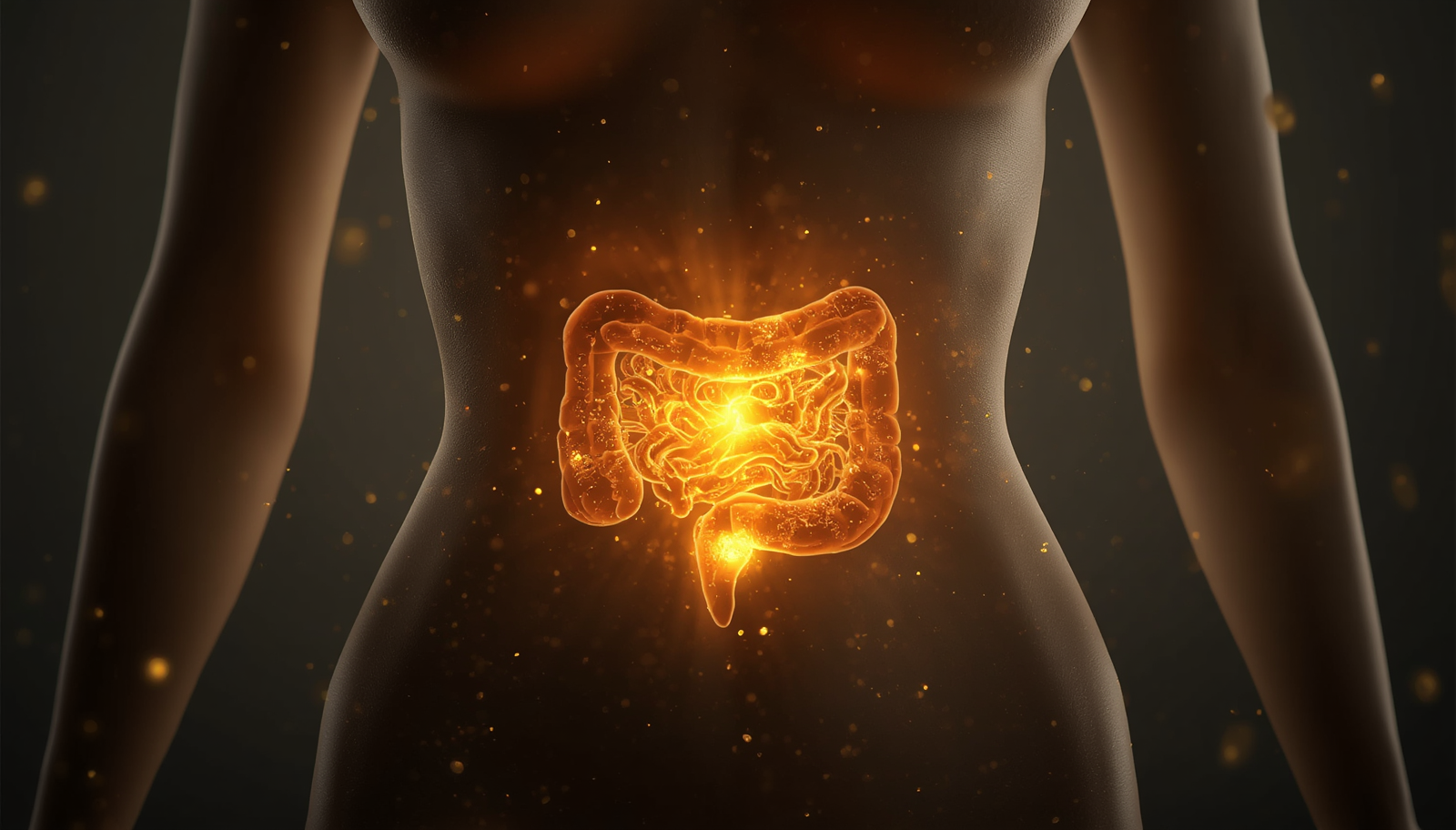
As we get older, the diversity of our gut microbiome naturally decreases. This matters more than most people realise, because diversity is one of the strongest indicators of a healthy gut, and a less diverse microbiome has real consequences for how we feel and function.
Here is what the research tells us:
Diversity equals longevity: A study of over 9,000 people found that the healthiest adults aged 80 and above had something in common: more unique and diverse gut microbiomes than their less healthy peers. The more varied the microbiome, the better their overall health outcomes.
Less diversity means more risk: A less diverse microbiome is consistently associated with frailty, chronic illness, higher levels of inflammation and greater reliance on medication as we age.
Microbiome transplants show promise: In animal studies, transplanting gut microbes from younger animals into older ones improved brain function, immune response and gut barrier integrity in the recipients. While this research is still in its early stages in humans, it points to just how powerful the microbiome's influence on ageing really is.
Inflammation is the link: An imbalanced gut promotes a state of low-grade, chronic inflammation sometimes called inflammaging, which researchers now believe is one of the primary drivers of age-related decline, from joint pain and fatigue to cognitive changes.
The takeaway is simple: supporting your gut microbiome is not just about feeling better today. It may be one of the most important long-term investments you can make in how well you age.

The Gut Microbiome and Cancer
This is an area of research that is moving quickly, and the findings are significant. Emerging evidence shows that the state of your gut microbiome can both influence the likelihood of certain cancers developing and affect how well your body responds to treatment if cancer does occur.
It is worth saying clearly: gut health does not prevent cancer. But the connection is real and growing, and it is one more reason why the microbiome matters beyond digestion.
Here is what the current evidence shows:
Chronic inflammation creates risk: When the gut microbiome is out of balance, it can trigger persistent, low-grade inflammation throughout the body. Over time, this type of inflammation creates an environment that may increase the likelihood of abnormal cell growth, particularly in the colon.
Dysbiosis is linked to colorectal cancer: Specific patterns of gut bacterial imbalance have been identified in people with colorectal cancer, with certain harmful bacteria found at higher levels and beneficial bacteria at lower levels compared to healthy individuals.
The microbiome influences treatment outcomes: Some of the most compelling recent research shows that patients with a more diverse, balanced gut microbiome respond better to immunotherapy, one of the main cancer treatments. Certain gut bacteria appear to enhance the immune system's ability to recognise and attack cancer cells.
Bile acids and cancer risk: Research published in late 2024 identified previously unknown links between the way gut microbes modify bile acids (substances produced by the liver to help digest fats) and the risk of colon cancer, suggesting that what your microbes do with the food you eat may be as important as the food itself.
The science here is still developing, but the message is consistent: a healthy, diverse gut microbiome appears to be protective, and an imbalanced one may increase vulnerability.
How to Support Your Gut: Simple Steps That Actually Work
The good news is that your gut microbiome is not fixed. It responds to what you eat, how you live and the choices you make, often quite quickly. Here are the most evidence-backed ways to support it.
1. Eat as many different plants as possible
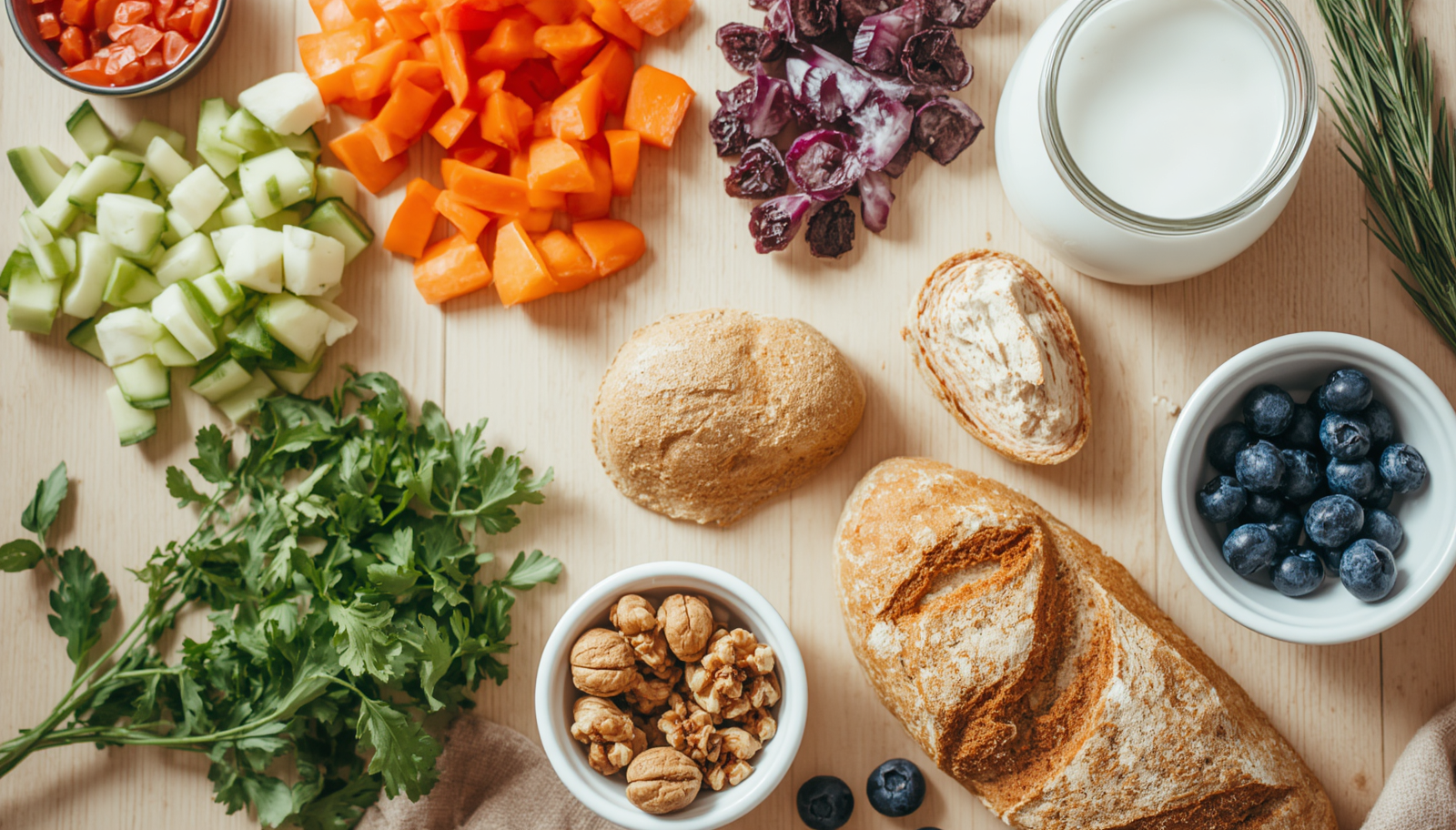
The single biggest predictor of a diverse, healthy microbiome is the variety of plants in your diet. Fruits, vegetables, wholegrains, legumes, nuts and seeds all feed different types of beneficial bacteria. Research suggests aiming for 30 different plant foods per week. This sounds like a lot, but herbs, spices and different coloured vegetables all count.
2. Include fermented foods regularly
Fermented foods like natural yogurt, kefir, kimchi, sauerkraut and kombucha contain live beneficial bacteria that help restore and maintain a healthy gut environment. Even small amounts eaten regularly can make a meaningful difference.
3. Add gut-healing foods
Bone broth: rich in collagen and an amino acid called glutamine, both of which help repair the gut lining.
Garlic: acts as a prebiotic, meaning it feeds the good bacteria already living in your gut.
Slippery elm: a traditional herbal remedy that soothes inflammation in the digestive tract and supports the gut lining.
4. Make sure you are getting the right nutrients
Omega-3 fatty acids: found in oily fish like salmon, mackerel and sardines, increase levels of beneficial bacteria and help reduce gut inflammation.
Zinc, magnesium, selenium and vitamins A, D, B and C: all play important roles in maintaining the integrity of the gut lining and keeping inflammation under control.
Polyphenols: the plant compounds found in green tea, dark chocolate, olive oil and berries, act as fuel for beneficial gut bacteria.
5. Look at your lifestyle Your gut microbiome does not just respond to food. It is also influenced by:
How much you move: regular exercise increases microbial diversity.
How well you sleep: poor sleep disrupts the gut-brain axis and promotes inflammation.
How you manage stress: chronic stress directly alters gut bacteria and compromises the gut lining.
Time spent in nature: exposure to natural environments introduces beneficial microbes that urban environments do not.
So What Does All of This Mean For You?
Hippocrates was onto something. The gut is not just where food goes. It is where so much of your health is made or broken: your mood, your energy, your immunity, your resilience as you age, and even, as the newest research suggests, your cognitive function.
The most exciting thing about all of this is that the gut microbiome is responsive. It changes based on what you feed it, how you live and the support you give it. That means the choices you make every day genuinely matter.
If you have been struggling with digestive symptoms, low energy, hormonal imbalances, skin issues, mood changes or simply not feeling like yourself, your gut may be a good place to start looking for answers.
Personalised nutrition therapy takes a root cause approach, investigating what is happening in your body and building a plan that is specific to you, not a generic protocol.
Of course, your gut does not work in isolation. It is in constant conversation with your hormones, which is why so many women notice their digestion changing across their cycle. If that sounds familiar, I have written about why bloating gets worse before your period and what actually helps.

Ready to take control of your health from the inside out?
Book a free 20-minute discovery call and let's start the conversation.
Click here to book.
References
Ağagündüz, D. Cocozza, E. Cemali, O. et al. ‘Understanding the role of the gut microbiome in gastrointestinal cancer: A review’, Frontiers in Pharmacology, 14. Available at: https://doi.org/10.3389/fphar.2023.1130562.
Breit, S. Kupferberg, A. Rogler, G. et al. (2018). ‘Vagus Nerve as Modulator of the Brain–Gut Axis in Psychiatric and Inflammatory Disorders’, Frontiers in Psychiatry, 9(44). Available at: https://doi.org/10.3389/fpsyt.2018.00044.
Conlon, M. and Bird, A. (2014). ‘The Impact of Diet and Lifestyle on Gut Microbiota and Human Health’, Nutrients, 7(1), pp.17–44. Available at: https://doi.org/10.3390/nu7010017.
DeCasien, A.R., Aronoff, J.E., Mallott, E.K. et al. (2026). 'Primate gut microbiota induce evolutionarily salient changes in mouse neurodevelopment', Proceedings of the National Academy of Sciences, 123(2). Available at: https://doi.org/10.1073/pnas.2426232122
Jackson, M.A. Jeffery, I.B. Beaumont, M. et al. (2016). ‘Signatures of early frailty in the gut microbiota’, Genome Medicine, 8(1). Available at: https://doi.org/10.1186/s13073-016-0262-7.
Leeuwendaal, N.K. Stanton, C. O’Toole, P.W. et al. (2022). ‘Fermented Foods, Health and the Gut Microbiome’, Nutrients, 14(7), p.1527. Available at: https://pubmed.ncbi.nlm.nih.gov/35406140/.
Luesma, M.J. López-Marco, L. Monzón, M. et al. (2024). ‘Enteric Nervous System and Its Relationship with Neurological Diseases’, Journal of Clinical Medicine, 13(18), pp.5579–5579. Available at: https://doi.org/10.3390/jcm13185579.
Margolis, K.G., Cryan, J.F. and Mayer, E.A. (2021). ‘The Microbiota-Gut-Brain Axis: From Motility to Mood’, Gastroenterology, 160(5). Available at: https://doi.org/10.1053/j.gastro.2020.10.066.
Matar, A., Abdelnaem, N. and Camilleri, M. (2025). ‘Bone Broth Benefits: How Its Nutrients Fortify Gut Barrier in Health and Disease’, Digestive Diseases and Sciences. Available at: https://doi.org/10.1007/s10620-025-08997-x.
O’Riordan, K.J. Moloney, G.M. Keane, L. et al. (2025). ‘The gut microbiota-immune-brain axis: Therapeutic implications’, Cell Reports Medicine, 6(3), p.101982. Available at: https://doi.org/10.1016/j.xcrm.2025.101982.
Peterson, C.T. Sharma, V. Uchitel, S. et al. (2018). ‘Prebiotic Potential of Herbal Medicines Used in Digestive Health and Disease’, Journal of Alternative and Complementary Medicine, 24(7), pp.656–665. Available at: https://doi.org/10.1089/acm.2017.0422.
Stebegg, M. Silva-Cayetano, A. Innocentin, S. et al. (2019). ‘Heterochronic faecal transplantation boosts gut germinal centres in aged mice’, Nature Communications, 10(1). Available at: https://doi.org/10.1038/s41467-019-10430-7.
Sun, L.J., Li, J.N. and Nie, Y.Z. (2020). ‘Gut hormones in microbiota-gut-brain cross-talk’, Chinese Medical Journal, 133(7), pp.826–833. Available at: https://doi.org/10.1097/cm9.0000000000000706.
Wan, M.L.Y., Ling, K.H., El-Nezami, H. et al. (2018). ‘Influence of functional food components on gut health’, Critical Reviews in Food Science and Nutrition, 59(12), pp.1927–1936. Available at: https://doi.org/10.1080/10408398.2018.1433629.
Wilmanski, T. Diener, C. Rappaport, N. et al. (2021). ‘Gut microbiome pattern reflects healthy ageing and predicts survival in humans’, Nature Metabolism, 3(2), pp.274–286. Available at: https://doi.org/10.1038/s42255-021-00348-0.
Zhang, P. (2022). ‘Influence of Foods and Nutrition on the Gut Microbiome and Implications for Intestinal Health’, International Journal of Molecular Sciences, 23(17), p.9588. Available at: https://doi.org/10.3390/ijms23179588.